
A pastor from Charlotte brings thirty-two church members through Dung Gate at eight in the morning. The group expects ancient stone walls like those surrounding the Old City. Instead, their guide directs them south toward a narrow rocky ridge sloping down into the Kidron Valley, where active excavations and steep paths cut into bedrock reveal the place where Jerusalem began three thousand years ago.
Most first-time visitors confuse the Ottoman ramparts built in the sixteenth century with the original biblical capital. King David conquered a Jebusite stronghold on this lower southeastern hill rather than the high ground inside the modern Old City walls (2 Samuel 5:6-9). Walking this ridge takes you through the administrative seat of the kings of Judah and deep into underground aqueducts carved under siege. Misjudging the physical demands or the logistical sequence of this site costs American church groups entire afternoons.
Groups that arrive without reservations wait up to two hours at the gate during spring pilgrimage months. Visitors who wear running shoes into the water tunnel discover their footwear ruined before they reach the Western Wall. Older congregation members get separated when organizers fail to arrange transit from the lower pool back up the steep hill. In 35 years of operating tours for American groups, we have seen that mastering these operational details protects the spiritual focus of the pilgrimage.
Reading time: 5 minutes
Key Points
- The City of David is the original biblical Jerusalem, located on a narrow ridge south of the present Old City walls, not inside them.
- A complete guided visit takes about three hours, and Hezekiah’s Tunnel adds thirty-five to forty-five minutes of walking through 533 meters of flowing water.
- A dry alternative, the Canaanite Channel, lets travelers who prefer not to wade complete the same underground route with lighting and level footing.
- Talya Tours builds the scripture readings, worship stops and pacing of each visit around the denomination of the American group.
Table of Contents
What Is Included in an Authentic City of David Tour in Jerusalem?
An authentic City of David tour begins on the high observation deck overlooking the Kidron and Hinnom valleys. From this stone vantage point, travelers see the geography that protected ancient biblical Jerusalem for centuries. The visit then moves through royal stone structures, down fortified rock shafts, and into underground water conduits.
Every sector reveals another chapter of biblical narrative verified by stone inscriptions and pottery layers. You inspect the massive palace ruins before descending past the fortified tower guarding the Gihon Spring (1 Kings 1:38-40). The route leads underground through rock-cut tunnels and ends at the open waters of the Pool of Siloam (John 9:1-7). The site sits within the protected perimeter of the Jerusalem Walls National Park, and a curated ancient Jerusalem tour requires a guide who links physical bedrock with biblical records rather than treating the park as a casual walk.
Many American congregations pair this morning exploration with our comprehensive Jerusalem day tours to connect the underground ruins with the holy places above.
How Long Does a Guided City of David Tour Take?
Self-guided visitors who walk only the upper excavations spend roughly ninety minutes on site. They look at signboards, view the audio-visual presentation, and leave without entering the subterranean water networks. A complete guided tour requires three full hours from entry to exit because it covers security clearance and the orientation film before an unhurried descent through the royal quarters, the walk through the subterranean aqueducts and the gathering at the historic pool basin. American church groups must also factor in fifteen minutes for security screening and bathroom breaks at the visitor pavilion.
Walking down the ridge takes you roughly two hundred feet lower than the ticket office. Returning to the summit on foot requires an uphill climb on paved access roads, which can exhaust senior travelers under direct sun. At Talya Tours, we station air-conditioned mini-buses at the southern basin near Siloam. Our groups board their vehicles immediately after emerging from the tunnel, which saves thirty minutes of steep climbing and keeps the schedule intact for afternoon appointments.
What Is Hezekiah’s Tunnel and Why Is It the Highlight of the Visit?
In the late eighth century BCE, King Hezekiah faced the advancing army of the Assyrian ruler Sennacherib (2 Chronicles 32:2-4). The primary water supply of Jerusalem, the Gihon Spring, flowed outside the fortified city ramparts. Leaving the water exposed meant the invading army would find sustenance while Jerusalem starved during a siege. Hezekiah sealed the outer spring head and carved an underground conduit directly through dolomite bedrock (2 Chronicles 32:30). His engineering crew diverted the water into the western basin inside the city defenses (2 Kings 20:20).
Carved with hand chisels, the tunnel winds across 533 meters of dense rock beneath the inhabited ridge. In 1880, local youths spotted a six-line inscription in ancient Paleo-Hebrew script cut into the limestone wall near the southern portal. The Siloam Inscription commemorates the moment the two digging crews met deep underground, hearing each other’s voices through the remaining rock. This engineering achievement protected the City of David during the crisis and remains the centerpiece of any ancient Jerusalem tour.
How Long Is Hezekiah’s Tunnel and What Is the Walk Time?
The subterranean aqueduct measures exactly 533 meters, which equals over 1,740 feet of continuous bedrock passage. The direct overland distance between the spring and the pool is only 320 meters, but the tunnel meanders in an S-curve through the limestone ridge. Walking through the wet cavern takes thirty-five to forty-five minutes depending on group speed.
Movement is strictly single file because the carved passage narrows to two feet wide at several points. Once your group steps into the water at the northern shaft, you must walk the entire distance. No side exits, emergency ladders, or bypass doors exist along the 533-meter route. For this reason, our guides evaluate physical stamina and personal comfort before any group enters the tunnel.
Can You Choose a Dry Route Instead of Walking in Water?
Not every traveler in an American church group wants to wade through water in pitch darkness. The site provides an ancient dry alternative known as the Canaanite Tunnel, designated by archaeologists as Channel II. This bypass system was cut into bedrock roughly eight hundred years before Hezekiah, during the Middle Bronze Age II. Canaanite builders carved this channel along the eastern ridge slope to direct spring water to agricultural terraces in the Kidron Valley (Isaiah 8:6). Today, Channel II features level walkways and artificial lighting throughout its length, and travelers remain completely dry while observing the stone-cutting techniques of early Jerusalem.
During our City of David tour, we split congregations into two squads right at the spring fortress. The water team enters Hezekiah’s aqueduct, while travelers preferring the dry path walk the Canaanite channel alongside their guide. Both groups emerge at the southern basin at roughly the same time and reunite at the Pool of Siloam.
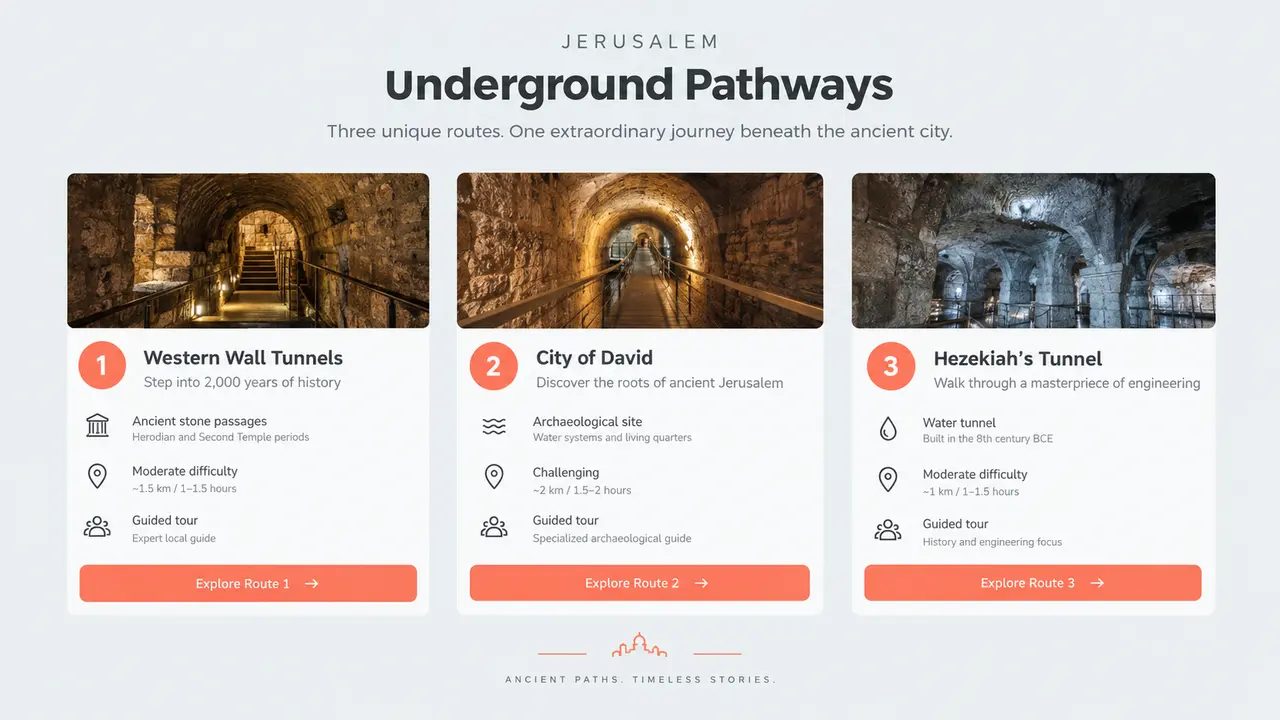
| Route Option | Total Distance | Average Walk Time | Water Level | Lighting | Physical Demand | Ideal Pilgrim Profile |
|---|---|---|---|---|---|---|
| Hezekiah’s Wet Tunnel | 533 meters | 35 to 45 minutes | Ankle to mid-thigh | Total darkness, headlamps required | Moderate, continuous bending | Active adults and adventurous youth |
| Canaanite Channel II | Roughly 400 meters | 20 to 25 minutes | Completely dry | Electric overhead lighting | Low to moderate, level footing | Travelers preferring dry clothes |
| Above-Ground Surface Path | Roughly 600 meters | 30 minutes | Dry outdoor paths | Natural sunlight | Paved stairs and downhill walking | Travelers avoiding enclosed spaces |
How Deep Is the Water in Hezekiah’s Tunnel?
Water depth inside the aqueduct varies with seasonal rainfall and current Gihon Spring output. At the northern entrance near the spring head, the water reaches its deepest point. For an average adult, this initial pool measures twenty-four to twenty-eight inches deep, reaching mid-thigh or near hip level for shorter adults. After the first thirty paces, the water drops steadily to knee level. Throughout the middle 400 meters of the tunnel, the flow remains ankle-deep, running between six and eight inches across smooth bedrock.
Near the southern exit into Siloam, the water trickles across the stone floor at shallow depths of four inches. The water temperature holds at a constant sixty-six degrees Fahrenheit throughout the year, which provides welcome relief on hot summer days when the Jerusalem heat reaches ninety. Anyone walking the tunnel should expect to get wet up to the waist.
What Should You Wear and Bring for the Wet Tunnel Experience?
Proper gear prevents injuries and keeps your day running smoothly. Bedrock floors inside the tunnel are uneven, with submerged ridges and loose pebbles that make bare feet impossible. Park authorities strictly ban bare feet and loose flip-flops because slippery rubber soles slide easily on wet dolomite. We instruct every American traveler to pack dedicated water footwear inside their daypack. Heavy denim jeans absorb pounds of cold water and take hours to dry, leaving travelers shivering once they enter air-conditioned churches. Quick-dry synthetic shorts or lightweight hiking pants rolled above the knee work best for this segment.
Essential Gear Checklist for the City of David
Closed-toe water shoes with rubber traction soles protect your feet against submerged rocks. A compact waterproof headlamp keeps both hands free to steady yourself along the uneven tunnel walls, since mobile phone flashlights drain batteries fast and risk slipping into the dark current. A light packable towel and a dry change of clothes should remain on the tour bus for your afternoon stops. A waterproof neck pouch keeps your passport and wallet dry throughout the underground walk. A personal water bottle provides hydration on the sunlit upper slopes before you head below ground.
Is the City of David Tour Suitable for Families and Children?
Children aged six and older typically consider the water tunnel the most exciting adventure of their Israel visit, and splashing through the cold stream with flashlights turns ancient history into active discovery. However, parents must recognize that strollers cannot enter any underground sector of the park, and the route contains dozens of steep stone stairs descending to the spring and ascending from the pool basin.
Carrying toddlers in chest harnesses inside the tunnel is dangerous because ceiling heights drop abruptly to five feet in certain sections, forcing parents to bend double in running water on slick rock. Families with children under five should opt for the above-ground archaeological paths and the 3D theater presentation at the visitor center, so youngsters learn about biblical kings without facing thirty-five minutes in an enclosed dark channel. When planning a tour for multi-generational families from American churches, we balance these demands so every age group enjoys the site safely.
Is the Tunnel Tour Safe for People with Claustrophobia?
We offer an honest assessment to every American pastor who asks about subterranean conditions. The water passage is narrow, dark, and carved through solid bedrock deep beneath city streets. Ceiling heights change dramatically without warning. In some sections, the rock ceiling rises twelve feet overhead, creating an airy feel. In other stretches, the roof dips low enough that adults over six feet tall must duck for several paces. The walls stay between twenty and twenty-eight inches apart throughout the walk.
Once inside, there is no natural sunlight and no artificial illumination. The only light comes from the headlamps carried by your fellow travelers. If a traveler experiences moderate or severe claustrophobia, they should skip the wet tunnel, because entering an enclosed conduit with thirty people ahead and behind can trigger acute anxiety. Such guests enjoy an exceptional visit by following our guide through the Canaanite dry channel or viewing the above-ground palaces.
What Archaeological Treasures Are Uncovered Beyond the Tunnel?
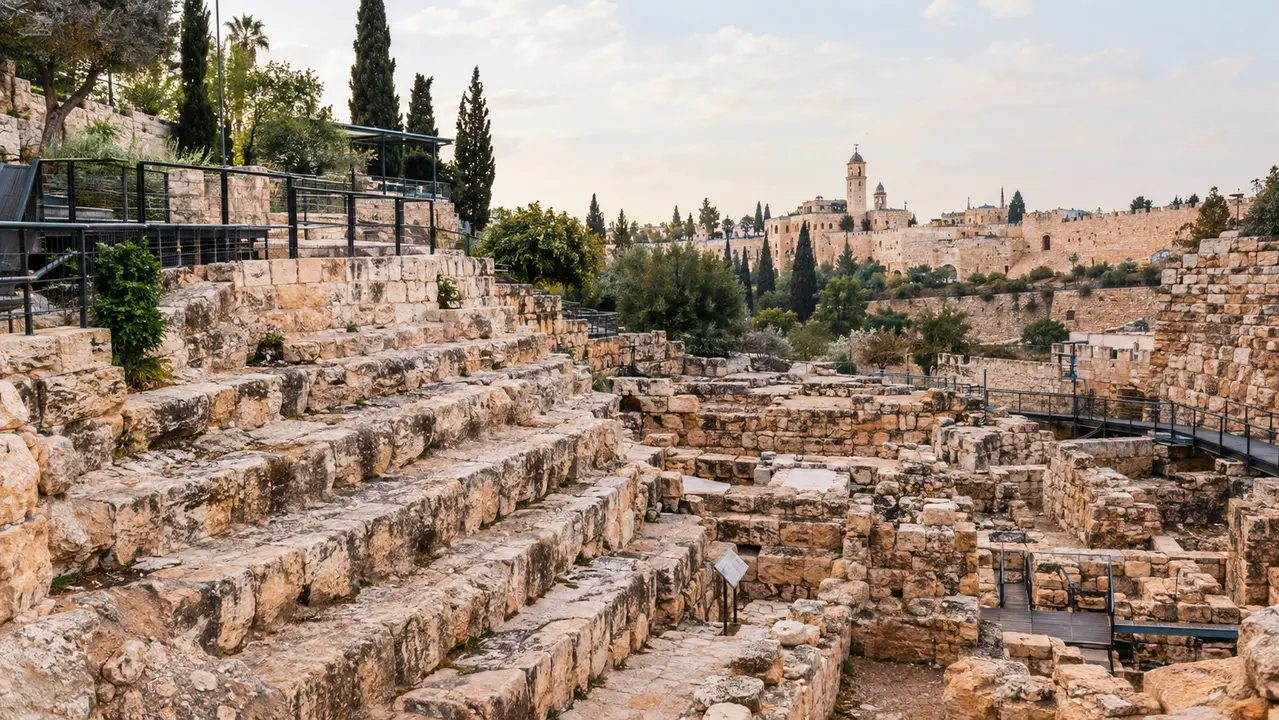
Many first-time visitors think this park only features water passages, but the dry archaeological sectors reveal the physical capital of the United Monarchy and the Kingdom of Judah. At the summit of the hill sits the Large Stone Structure, a monumental public building that archaeologist Dr. Eilat Mazar unearthed and identified as the palace King David constructed when he captured the fortress of Zion (2 Samuel 5:11). Beneath the palace lies the Stepped Stone Structure, a massive sixty-foot-high terrace of stones built against the hillside that supported the biblical fortress known as the Millo (2 Samuel 5:9).
Excavations in the nearby Royal Quarter revealed residential rooms destroyed by the Babylonians in 586 BCE (2 Kings 25:8-10). Inside these burn layers, archaeologists discovered clay bullae used to seal official scrolls. Two of these seal impressions bear the names of Jehucal son of Shelemiah and Gedaliah son of Pashhur, royal officials named in the Bible (Jeremiah 38:1). Seeing these biblical names stamped into ancient clay gives travelers tangible proof of the City of David and its historical reality.
What Is the Significance of the Pool of Siloam and the Pilgrimage Road?
The southern terminus of the water tunnel opens into the Pool of Siloam (John 9:1-11). This massive stone reservoir collected the fresh waters of the Gihon Spring in biblical antiquity, and pilgrims gathered here during the Second Temple period to immerse in ritual purity before ascending Mount Moriah. Here Jesus anointed the eyes of the blind man with clay and commanded him to wash in Siloam, restoring his sight (John 9:6-7). Recent excavations by the Israel Antiquities Authority have uncovered the monumental staircase of the pool, revealing stone steps where thousands once stood. Connecting the pool to the Temple Mount above is the Stepped Pilgrimage Road, an eight-meter-wide paved boulevard running six hundred meters beneath the modern ridge. Walking this original street lets pilgrims trace the footsteps of first-century worshippers ascending to the Temple.
On our curated Bible land tours, we align this archaeological encounter with the theological heart of your church tradition. An Evangelical or Baptist pastor will lead the group in reading John 9 at the stone steps of the pool, emphasizing Christ’s authority over blindness. A Catholic or Anglican pilgrimage group often gathers here to pray the Rosary or reflect on baptismal cleansing before continuing toward the Western Wall. Customizing this sequence connects the ancient stones directly with your congregation’s spiritual life.
| Christian Tradition | Primary Biblical Focus | Recommended Scripture Reading | Priority Site Highlight | Pacing and Ceremonial Adjustment |
|---|---|---|---|---|
| Baptist and Evangelical | Old Testament covenant and Christ’s healing ministry | 2 Samuel 5:6-12, 2 Chronicles 32:1-8, John 9:1-11 | Large Stone Structure and Pool of Siloam | Extended Scripture reading and group prayer at the Siloam steps |
| Catholic Parish Delegations | Liturgical pilgrimage roots and sacramental cleansing | 1 Kings 1:38-40, Psalm 122, John 9:1-7 | Stepped Pilgrimage Road and Gihon Spring | Recitation of the Psalms of Ascent and scheduled Mass nearby |
| Methodist and Presbyterian | Archaeological context and theological history of Judah | Jeremiah 38:1-6, Isaiah 8:5-8, John 9:1-38 | Area G Royal Quarter and Paleo-Hebrew bullae | Lectures by licensed biblical specialists and quieter reflection |
| Pentecostal and Charismatic | Living waters and spiritual breakthroughs under trial | 2 Chronicles 32:20-23, Ezekiel 47:1-9, John 7:37-39 | Hezekiah’s Tunnel interior and Gihon Spring head | Focused vocal praise and intercessory prayer at the subterranean spring |
Why Book a Guided Tour Rather Than Visiting Independently?
Visiting an active archaeological dig independently often leads to frustration. Without an expert guide, ancient ruins look like piles of disassembled limestone. Independent travelers arrive without reserved time slots and find the water tunnel booked by school groups and delegations, and walking the steep topography back up the Kidron Valley in wet clothes drains energy before the day is halfway through.
Booking a private tour of Jerusalem with Talya Tours transforms disconnected rocks into a coherent chronicle of Scripture. Our government-licensed Israeli guides have spent decades walking these excavations with American congregations. We secure optimal entry slots during cool morning hours, manage tunnel logistics, and tailor walking speeds to your members. With Talya Felner personally overseeing every itinerary, your group receives priority coordination from arrival to departure.
How to Combine the City of David with Other Historic Jerusalem Sites
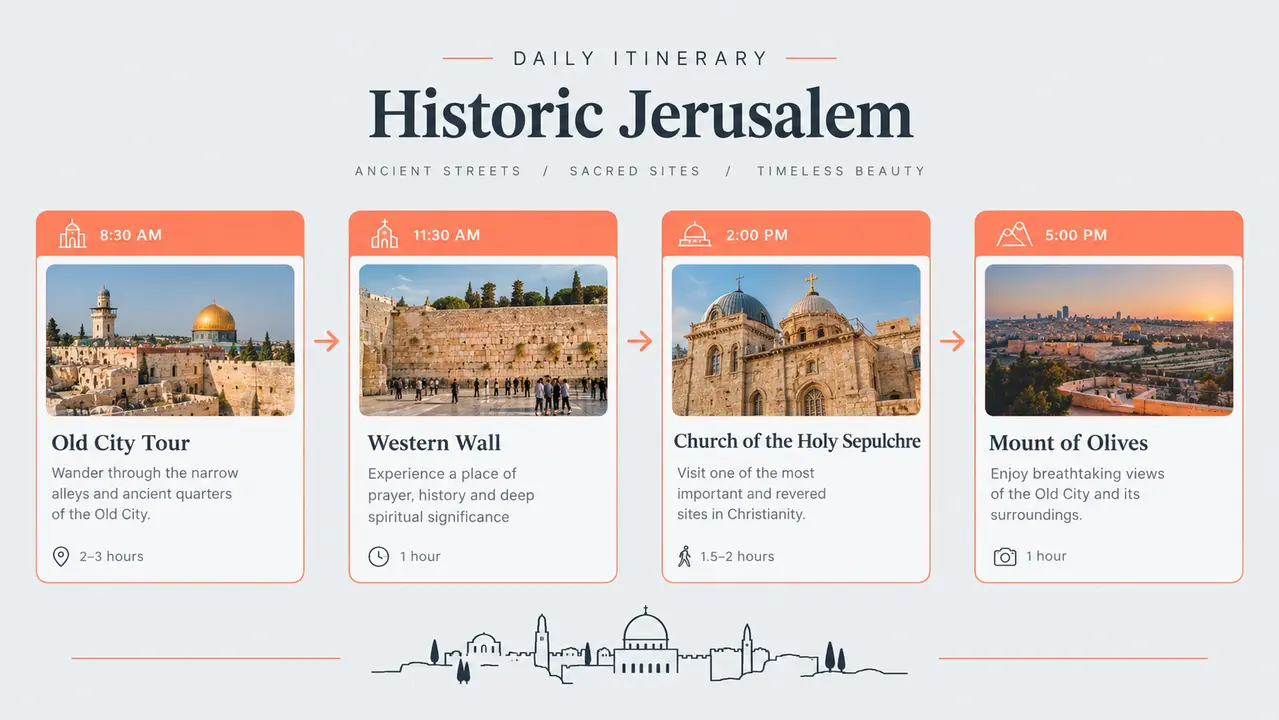
The City of David serves as the natural geographical foundation for exploring biblical Jerusalem. Because the site sits just outside Dung Gate, you can connect subterranean history with sacred sites inside the walls in one continuous day. We recommend exploring the City of David and Hezekiah’s Tunnel from eight thirty until eleven thirty in the morning. After you emerge at Siloam, our private shuttle transfers your group up to Dung Gate, where you enter the Southern Wall excavations at the Davidson Center to stand on the actual teaching steps of the Second Temple (Luke 2:46).
You then proceed to the Western Wall for midday prayer before ascending into the Jewish Quarter for lunch. In the afternoon, our guide leads you on an inspiring Jerusalem Old City tour through the Roman Cardo and the Christian Quarter, concluding at the Church of the Holy Sepulchre (John 19:41-42) or the Garden Tomb (John 19:41). This logical routing eliminates wasted transit across town, letting your group cover three thousand years of scriptural history without rushing.
| Time Window | Location and Sector | Scripture Reference | Walking Conditions | Practical Coordination Note |
|---|---|---|---|---|
| 08:30 to 11:30 | City of David and Hezekiah’s Tunnel | 2 Samuel 5, 2 Chronicles 32, John 9 | Subterranean rock walking, water wading | Pack water shoes and a dry change of clothes |
| 11:45 to 12:45 | Davidson Center and Southern Steps | Luke 2:41-52, Acts 2:1-41 | Open stone plazas and broad monumental stairs | Private bus transfer from Siloam to Dung Gate |
| 13:00 to 14:15 | Western Wall and Jewish Quarter | Psalm 122:1-9, Ezra 3:10-11 | Paved flagstones and gentle uphill city walk | Midday prayer time followed by lunch break |
| 14:30 to 17:00 | Old City Quarters and Holy Sepulchre or Garden Tomb | Matthew 27:32-61, John 19:38-42 | Narrow stone alleys and historic courtyards | End the day with communion or a devotional service |
Plan Your Group’s City of David Visit
If your church or ministry in the United States is beginning to plan a pilgrimage to Israel, Talya Tours will build the itinerary around your congregation’s own tradition. When you tell us your denomination and group size along with your travel dates, we will prepare a route, a scripture plan and a worship schedule that fit how your church reads the Bible.
Frequently Asked Questions About City of David Tours
How accessible is the City of David for travelers with mobility challenges?
The topography of the southeastern ridge is steep and features numerous stone steps. Wheelchair access is limited to the visitor pavilion, the observation deck, and the 3D theater. Travelers who cannot handle stairs cannot enter Hezekiah’s Tunnel or the lower archaeological sectors. For guests with mobility limitations, Talya Tours coordinates private golf-cart transfers and arranges alternate viewing stations so no traveler feels left behind during the tour.
Can you take photos or carry phones inside Hezekiah’s Tunnel?
You can bring mobile phones and cameras into the water channel, but you must keep them in a sealed waterproof pouch around your neck. Taking photos in pitch darkness while standing in rushing water is awkward, and if a phone slips from your fingers it sinks to the dark gravel floor where finding it is nearly impossible. We recommend keeping both hands free for balance and taking group photographs at the dry tunnel entrance and the Siloam Pool.
When should American church groups reserve City of David entry slots?
Entry permits for the wet tunnel tour are strictly regulated by the national park to prevent underground overcrowding. High pilgrimage seasons, especially March through May and September through November, sell out months in advance. At Talya Tours, we secure reserved morning entry windows for our American church groups six to nine months ahead, making sure your pilgrimage avoids long delays at the gate.
Do you adjust the City of David tour for different Christian denominations?
Yes, and this shapes the entire day. A Baptist or Evangelical group centers its visit on extended Scripture reading and group prayer at the Siloam steps. A Catholic parish schedules Mass nearby and walks the Pilgrimage Road with the Psalms of Ascent. Pentecostal groups often pause for worship and intercession at the Gihon Spring. The guides and readings, the worship stops and the pacing all follow the specific tradition of the visiting American group.
The City of David is where Jerusalem actually began, on a narrow ridge south of the walls most visitors expect. A well-planned visit takes about three hours and offers both a wet tunnel and a dry channel so every member of your congregation can participate, and it connects naturally with the Southern Steps, the Western Wall and the Old City in a single day. We can shape every detail, from entry reservations and shuttle transfers to scripture readings and worship moments, around the denomination and needs of your group.
Start Planning Your Congregation’s Pilgrimage
To discuss dates, routes, and logistical options for your church group, contact Talya Felner directly at [email protected]. Share your denomination and rough group size, and you will receive a proposed itinerary outline for review.

About the Author
Talya Felner is the Owner and CEO of Talya Tours Services (TTS), a leading professional tour operator in Israel. With over 35 years of experience and more than 90,000 travelers served, Talya has built TTS into a trusted name for Christian pilgrimages, biblical tours, and conferences for groups visiting Israel and the Holy Land. Her team designs each itinerary around the specific Christian denomination of the visiting group, whether Protestant, Catholic, Evangelical, Baptist, Methodist, Pentecostal, Lutheran, Presbyterian, Anglican, Orthodox, or another tradition, ensuring that sites, worship arrangements, and guides reflect what matters most to that congregation. From visas and accommodations to guides, transportation, and on-site coordination, TTS handles every detail so American pastors and group leaders can focus on the spiritual experience of their travelers.